


The Challenge
The provision of infrastructure and services for passengers and freight transport, in combination with the increased travel demand had played a key role in the world’s wealth and economic growth.
Unfortunately, the transportation sector has serious effects on the environment, especially because of the CO2 emissions. This sector is currently responsible for around one-quarter of the EU’s Greenhouse (GHG) emissions and is the second biggest emitter after the energy sector. The Transportation (excluding the international sea shipping and aviation segments) is the only sector in the EU whose absolute CO2 emissions were higher in 2012 than in 1990. According to Eurostat, transportation sector was responsible for just 17,3% of CO2 emissions in the EU in 1990. In 2015, the percentage raised up to 28,5%. Within the transportation sector, road traffic, is responsible for over 72,9% (2016), of all emissions in the EU.
In Greece, transportation sector is responsible for over 1/4 of GHG emissions (27%). Since 1990, this percentage has been increased over 63% (International Energy – IEA).
The Solution
Alternative fuels urgently needed to break the over-dependence of European transport on oil and decrease the high negative effects of conventional fuels to environment. On September 19th 2014, the European Parliament and the Council adopted a directive for the deployment of alternative fuels recharging and refueling infrastructures (Directive 2014/94/EU). The directive requires, EU members to develop national policy frameworks for the market development of alternative fuels and their refueling infrastructures. The overall objective is “to overcome any artificial barrier from one country to another, in order to create confidence for industry and customers to trigger the market”.
Natural Gas (NG) is part of the EU strategy for the future of transport and it is promoted as one of the main alternative fuels in the directive of alternative fuels.
Natural Gas is used in traditional gasoline/internal combustion engine automobiles that have been modified, or in vehicles which were manufactured for CNG use, either alone (dedicated), with a segregated gasoline system to extend range (bi-fuel) or in conjunction with another fuel such as diesel (dual fuel).
The Implementation
What is TEN-T? What ’s the goal?
The Trans-European Transport Network (TEN-T) is a European Commission policy for the upgrade of transport infrastructures across the European Union towards a more efficient and sustainable future.
We strive to build new physical infrastructures, upgrade the existing transport platforms, adopt innovative digital technologies, and implement alternative fuels.
Our goal is to create a Europe-wide network of roads, railway lines, maritime shipping routes, ports, airports, and rail-road terminals, that is free of
- mobility bottlenecks
- missing route sections
- barriers of any kind - physical or operational
The ultimate objective of TEN-T is to create a single European transport area and to strengthen the social, economic and territorial cohesion of the European Union.
The TEN-T initiative
In the framework of the TEN-T/CEF Call 2016, DEPA Commercial S.A. in cooperation with OneTeam S.A., Lever S.A., and Optilog Advisory Services IKE proposed a a project under the name “Study on a pilot CNG filling station network across the Greek part of the Orient East Mediterranean road corridor.” which included the deployment of a pilot network of CNG refueling stations in the Greek part of the Orient East Mediterranean Road Corridor.
The TEN-T initiative aims to
- implement CNG as an alternative, more sustainable transportation fuel
- eliminate carbon dioxide emissions of transport
TEN-T step by step
The overall objective of the Action, is to support the development of a sustainable and efficient transportation system. The Action aims to promote the decarbonization of road transportation along the Orient/east-Med corridor, through the deployment of the alternative fuel, CNG, in Greece.
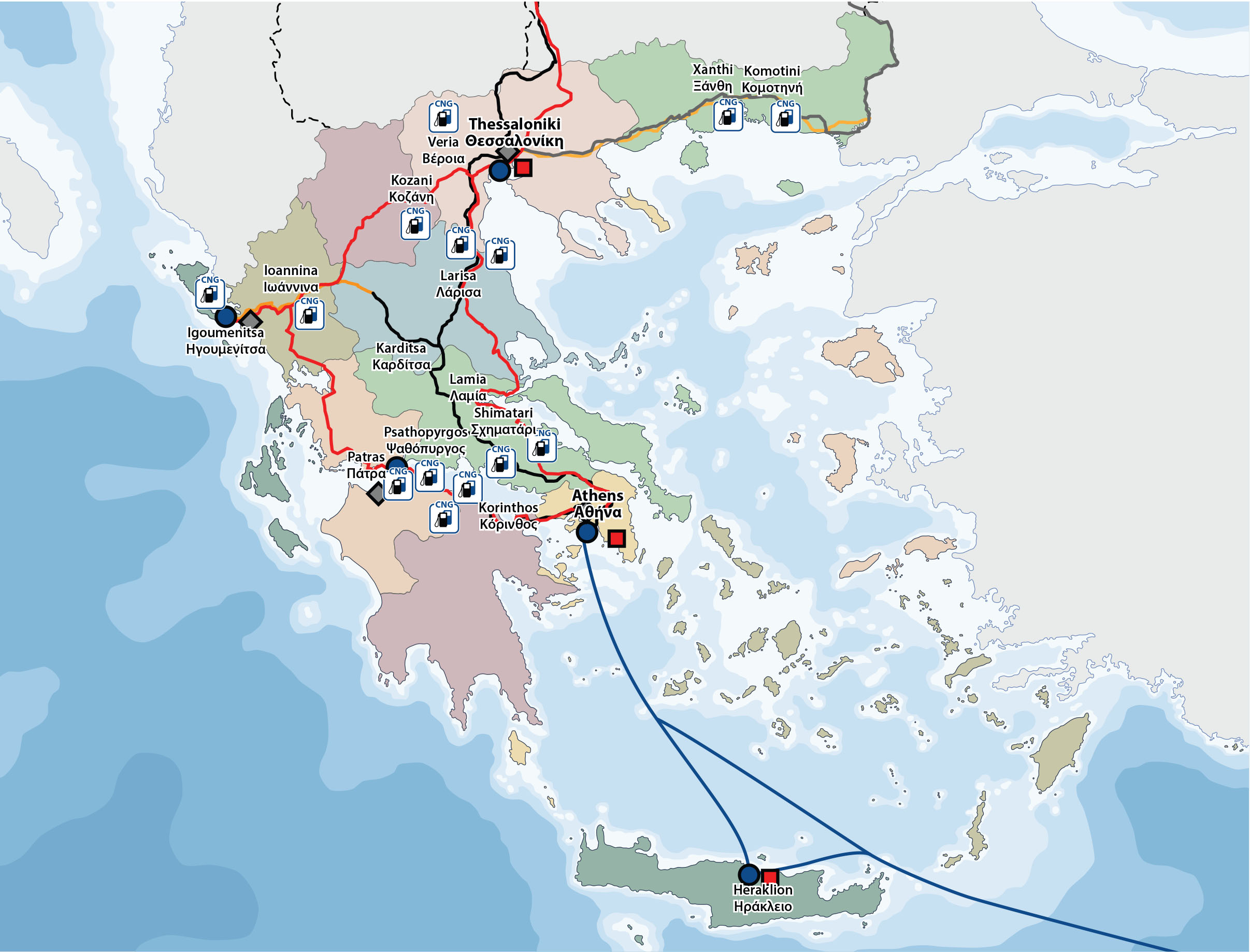
In order to make the project happen we initially created a plan for a CNG station network consisting of 10 refueling stations (with 13 refueling points) located in core nodes of the network:
- National Road Athens – Thessaloniki – Bulgarian Borders: Shimatari (Thiva- two refueling points), Evangelismos (Larisa - two refueling points)
- National Road Patras – Athens: Patra, Psathopyrgos (two refueling points)
- Egnatia Road: Igoumenitsa, Ioannina, Kozani, Veria, Xanthi, Komotini
Secondly, we aimed to promote the market penetration and deployment of CNG in Greece, specifically by increasing the visibility of the pilot CNG station network and of CNG as an alternative fuel, therefore expanding demand for both.
The CNG refueling station equipment installed at existing motorway public petrol stations. DEPA COMMERCIAL S.A. signed cooperation agreements with a well-established petrol station operators and used the existing station infrastructures and the operators’ billing system.
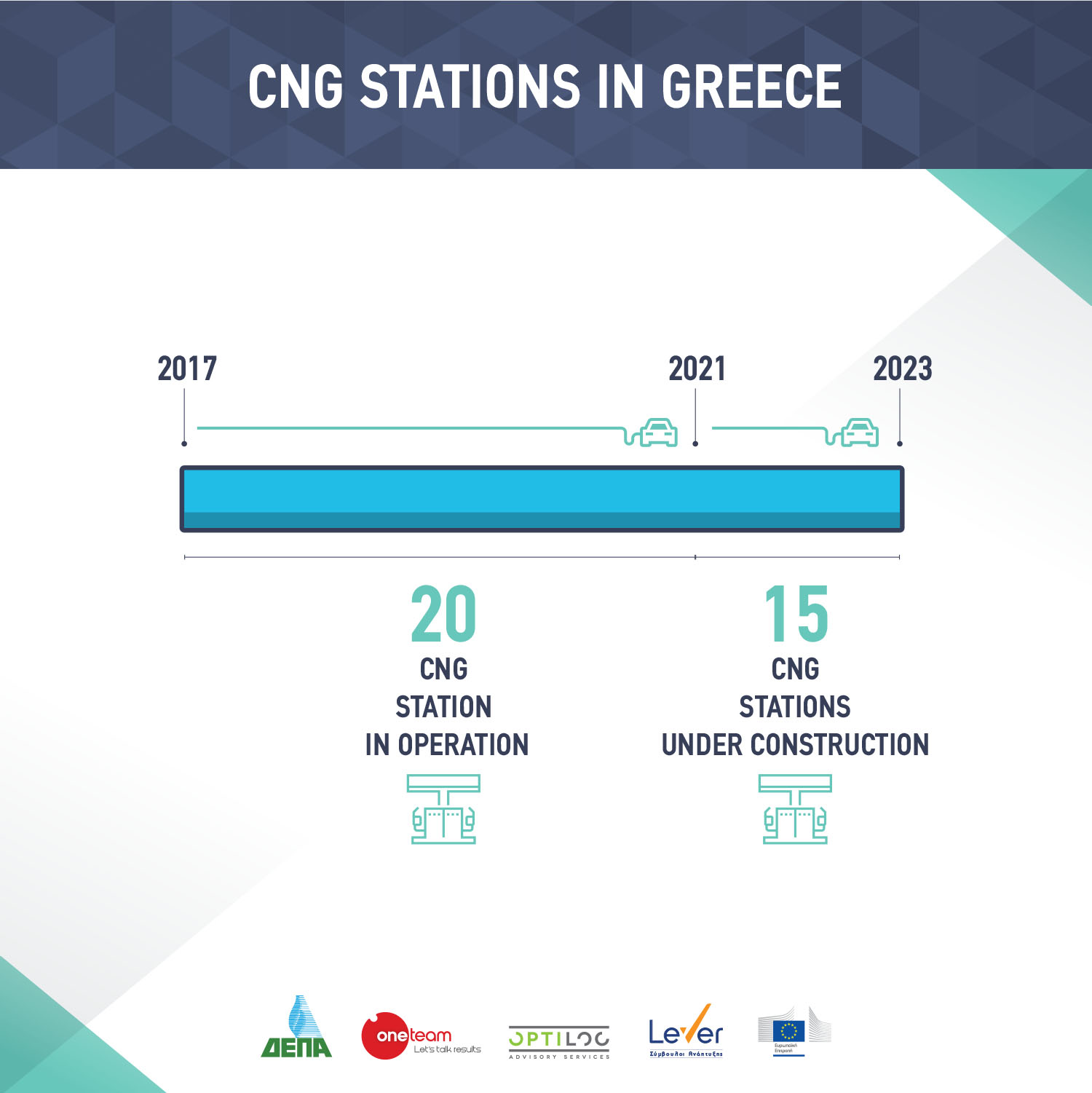
The project’s outcome
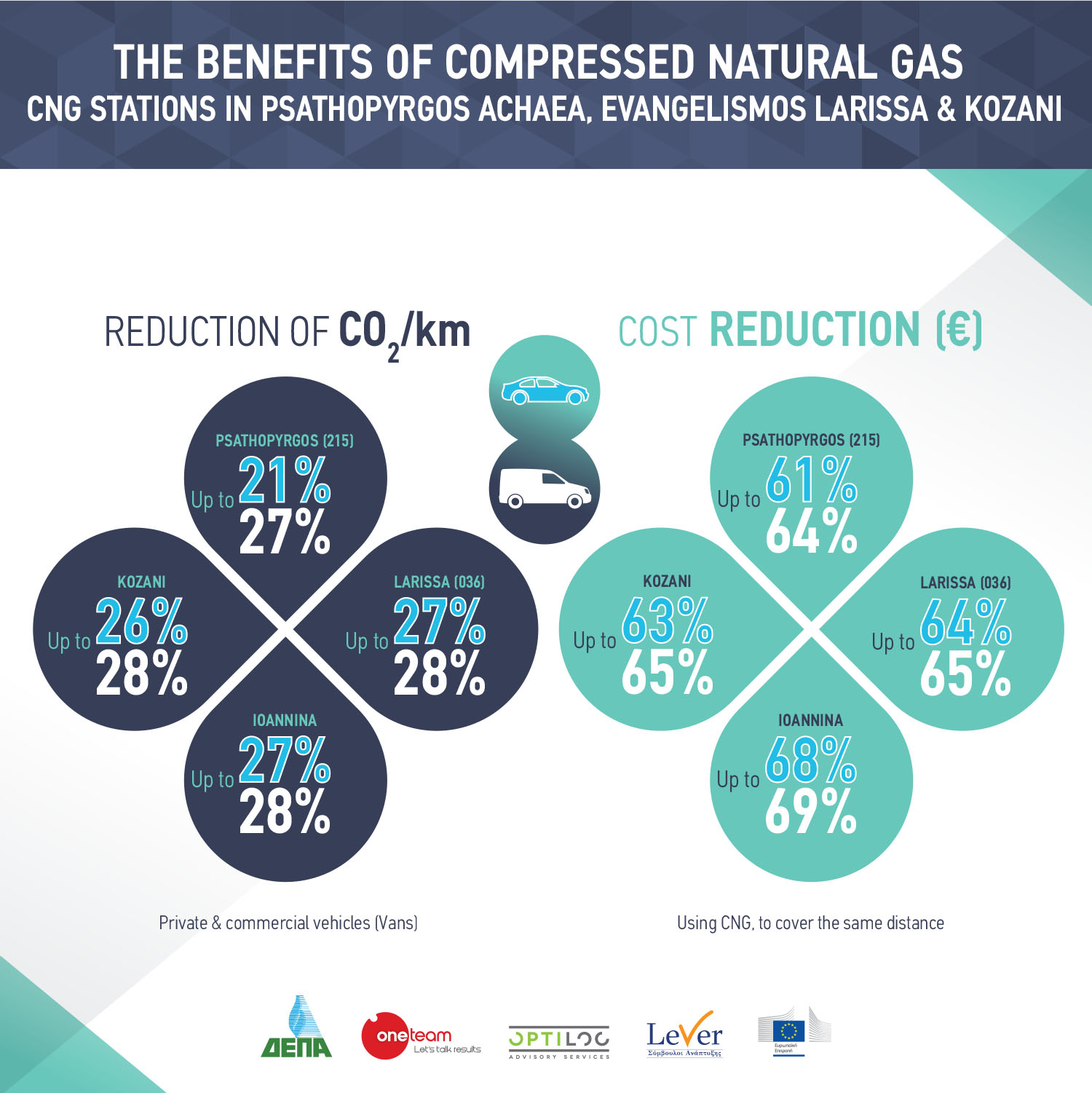
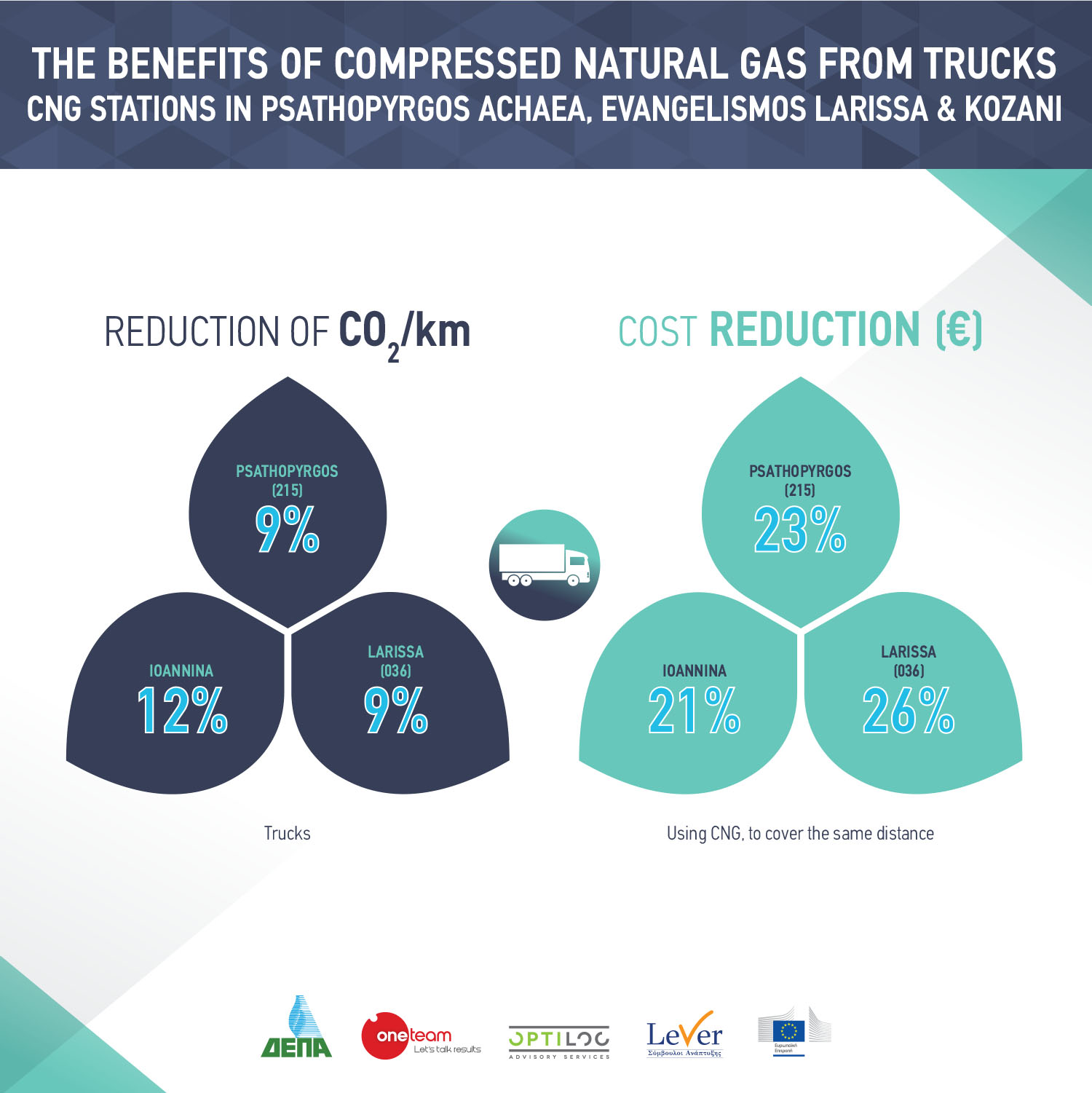
The study shows that the CNG fuel is way more efficient than the conventional fuels, both at price level as well as at CO2 emission level. At all stations, when comparing fuel cost, the difference between the two types of fuels (conventional vs. alternative) is obviously high. Regardless of size of the vehicles the different in price and CO2 emissions between the two types of fuels is significant.
Lessons learned
The carbon footprint from all transportation operations initiated by the CNG network calculated and the socio-economic impact of CNG as a fuel for road transport evaluated. The main results are:
- CNG produces much lower carbon dioxide emissions compared to conventional fuels and is much more environmentally friendly
- CNG operating vehicles are much more cost efficient than conventional vehicles. The cost reduction is also verified by other studies
- CNG works excellently in all climate conditions and is higher in octanes than gasoline, therefore higher performing
- CNG preserves any vehicle’s mechanisms better condition compared to conventional fuels, due to its eco-friendly nature
The project raised awareness of the benefits of CNG and has successfully introduced it as an alternative fuel in the Greek transport market.
With the help of DEPA and the new CNG network, the Greek market is now more ready to enter a new era of motor fueling.
Our initiative has shown that a more sustainable future is achievable.